- No extra padding is needed underneath for comfort. (Insulation is still needed underneath for warmth.)
- No wet ground to worry about in the rain.
- I can make camp anywhere there are two trees spaced adequately, including over uneven, steep, or rocky ground.
- Crawling insects and other critters are much less of a problem.
- In hot weather, ventilation is excellent due to sleeping on nothing but thin, air-cooled fabric.
- Using a small alcohol stove, I can cook under the tarp on rainy days. I can even do this while laying in the hammock.
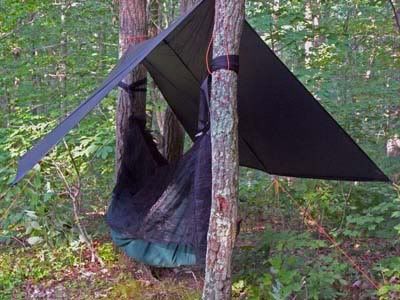
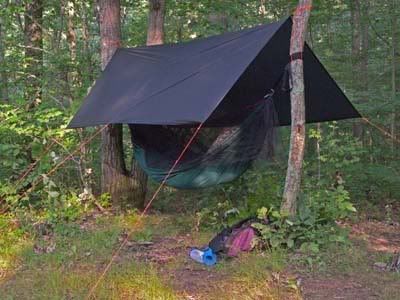
Tarp
- weight: around 18 oz with guylines and titanium stakes
- fabric: 1.1 oz silnylon fabric
- size: 8' x 10'
- Guylines are 1/16" spectra core with orange nylon sheath (Ed Speer's No Tangle Guylines)
- 6 titanium stakes
- Grommets at ridge tabs only for use with sticks or hiking poles when sleeping on the ground
Hammock
- weight: around 2 lbs with webbing
- fabric: Supplex nylon (more durability and weight support compared to 1.9 oz ripstop nylon)
- size: Single piece of fabric, around 10' 7" long
- Bug net (black noseeum mesh) will eventually attach to hammock with zippers, but here it's just draped over the hammock
- Ends are gathered in a specific pattern (similar to a Hennessey Hammock) and whipped with a bootlace
- 1" heavy weight polypropylene webbing, 13' on each end, tied to tree with a four wrap knot
Recent Modifications
- Added tie-out to side of hammock to prevent the side from hanging in my face.
- Changed the hammock suspension from simple webbing tied to trees to using steel cinch buckles for easier adjustment. This also allows the long pieces of webbing which wrap around the tree to be stored separately from the hammock to keep sap and pieces of bark from the webbing out of the hammock.
- Added climbing-rated carabiners to the end of the webbing to do a simple single wrap around the tree. The cinch buckles and carabiners add some weight, but allow faster setup and precise adjustment of the hammock position and hang.
- Made "snakeskins" from mesh to store the tarp and allow it to be hung over the hammock without blocking views of the sky, but ready for staking out at the first sign of rain
- The 1/16" tarp cord on the ends is too thin for tying to trees because it cuts into the bark too easily. A deep enough cut encircling the tree will kill it. I'm going to switch to 550 paracord.
- I'm going to experiment with using a ridgeline instead of the current end tie-outs on the tarp. I'll put prussik loops on each end, and then clip the tarp ends onto those to allow for precise positioning over the hammock and tension adjustment.
- I have added 18" lengths of paracord to the ends with loops tied every 5" for easily storing gear I want to keep accessible inside the hammock.
